
Building on What Works in Medicaid Program Integrity
Federal and state governments have shared interest in supporting Medicaid programs with enhanced and new federal-level tools including...
State and territory Medicaid teams have strong common interest with the federal government in ensuring that the program is as lean, efficient and accountable as possible.
Over 2026, Medicaid leaders across the country will be staging a complex portfolio of work with important implications for the federal/state-territory partnership on which the program is premised. This portfolio includes implementation of Medicaid provisions of H.R. 1, the One Big Beautiful Bill Act (OBBBA, also referred to as the Working Families Tax Cut legislation) as well as responding to priorities billboarded by the Center for Medicare & Medicaid Services (CMS) leadership; notably, a program-wide focus on strengthening efforts to address Medicaid fraud, waste and abuse (FWA).
State and territory Medicaid teams have strong common interest with the federal government in ensuring that the program is as lean, efficient and accountable as possible. That said, achieving that goal will not be possible without differentiating among the three components of FWA and identifying the best available means of addressing each of them. And while fraud – intentional gaming of the program by health care providers for their own financial benefit – is justifiably top of mind, federal and state/territory Medicaid officials could also be focusing more actively on abuse, where services beyond what is medically necessary may have been provided, as well as waste of Medicaid resources that results from not addressing leading cost drivers in the program.
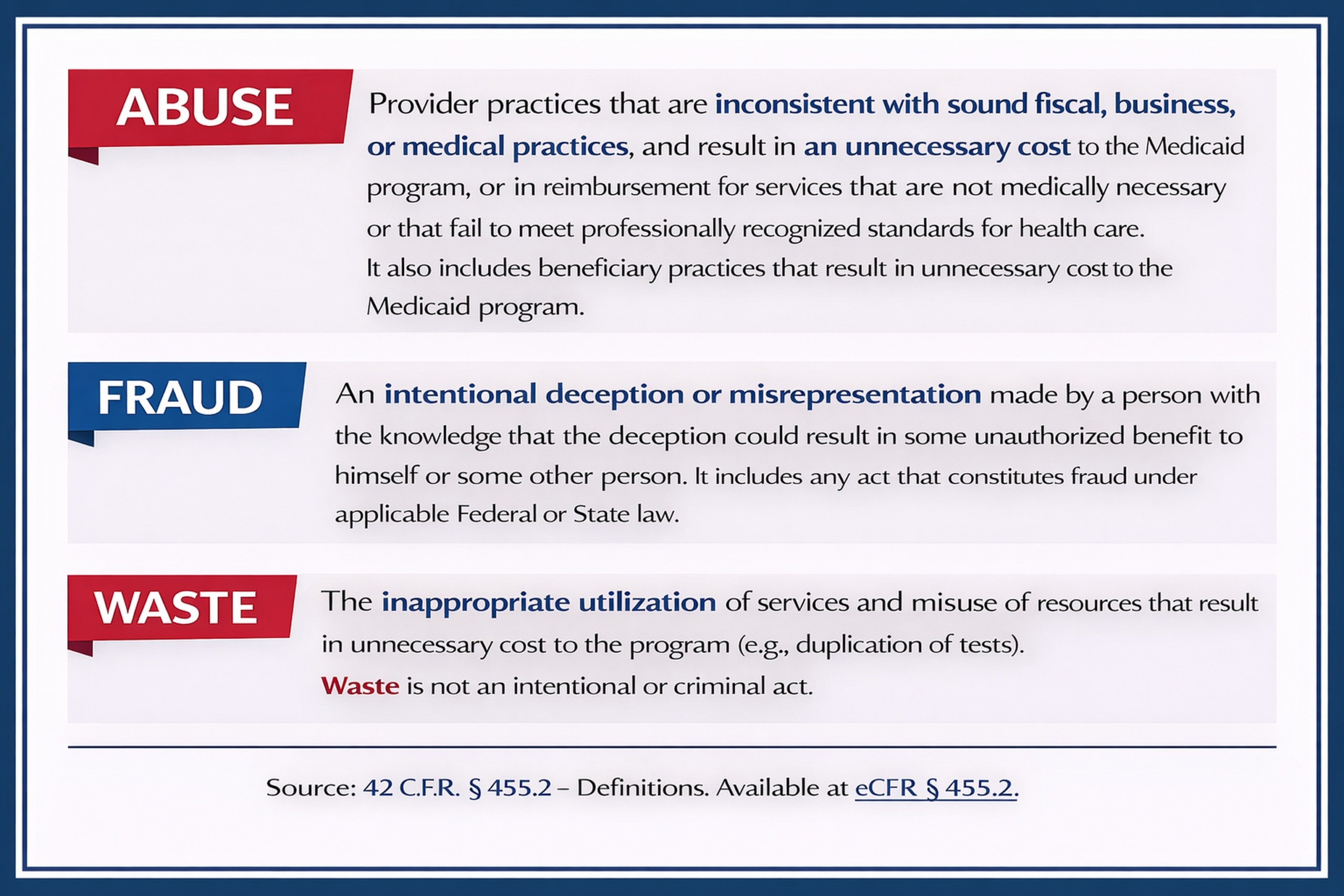
While state and territory programs are actively combating FWA through a range of tools and strategies, they could use more help from CMS. Specifically, CMS can help states/territories to:
In this watershed year of OBBBA/WFTC implementation, as well as renewed focus on program accountability, state and territory Medicaid programs will benefit from guidance and support from CMS in the mutual aim of continuing to enable access to high quality health services for all people who are eligible for the program, while exerting every possible lever to control costs and ensure adherence to all standards around beneficiary eligibility as well as proper provision of services by health care providers who are enrolled in the program. CMS has important opportunities to use its influence, partnerships with federal agency peers, and purchasing power to support programs in their efforts to control costs and to ensure program integrity.
Continue reading the second part in this series, “Why and How States and Territories are Addressing Fraud, Waste and Abuse.”
Drop us your email and we’ll keep you up-to-date on Medicaid issues.