What makes a rural community different from an urban one? Is it population density, housing density, or something less easily defined? Different federal agencies – including the U.S. Census Bureau, the Office of Management and Budget, and the Health Resources and Services Administration’s Federal Office of Rural Health Policy – have developed different ways to measure rurality. The experience of living in a rural area can also look vastly different, ranging from frontier regions in Alaska, to agricultural centers in West Virginia, to the forests of northeast Vermont.
As varied as the definitions of rural communities may be, the health care access challenges they face are strikingly consistent. Improving access to care for Americans living in rural areas requires navigating a web of interconnected barriers. Many rural communities experience persistent shortages of health care providers, limited access to emergency and specialty services, and gaps in maternal and behavioral health care. Hospital closures and service line reductions have further strained local systems in recent years. At the same time, rural residents tend to be older, have higher rates of chronic illness, and are more likely to live in poverty or lack reliable transportation than their urban counterparts. Rural residents are also more likely to receive publicly funded health care coverage, such as Medicaid.
Against this backdrop, enhancing rural health care delivery emerged as a major national focus at the end of 2025 and early 2026. This momentum followed the Centers for Medicare & Medicaid Services Medicaid Services announcement of$50 billion in awards through the Rural Health Transformation Program, an initiative designed to strengthen and modernize health care delivery in rural communities across all fifty states. The program aims to improve financial sustainability, expand workforce capacity, and support innovative models of care that meet the needs of rural populations.
While much work remains to implement the Rural Health Transformation Program, states have already made meaningful progress in closing access gaps within their rural communities. At NAMD’s 2025 Fall Conference, Medicaid Directors and Health and Human Services Secretaries from New Mexico Health Care Authority and Idaho Department of Health and Welfare presented on their states’ approaches. In New Mexico, targeted investments in primary care training have expanded the rural health workforce and strengthened care delivery capacity. Since 2019, six new accredited primary care residency programs have opened, increasing the total number statewide from eight to twelve. During this period, the number of primary care residents in training grew from 142 to 340, and programs achieved an average retention rate of 56 percent, exceeding the national average of 48 percent. Looking ahead, four additional residency programs are expected to be developed by 2030, with two scheduled to open in fiscal year 2026.
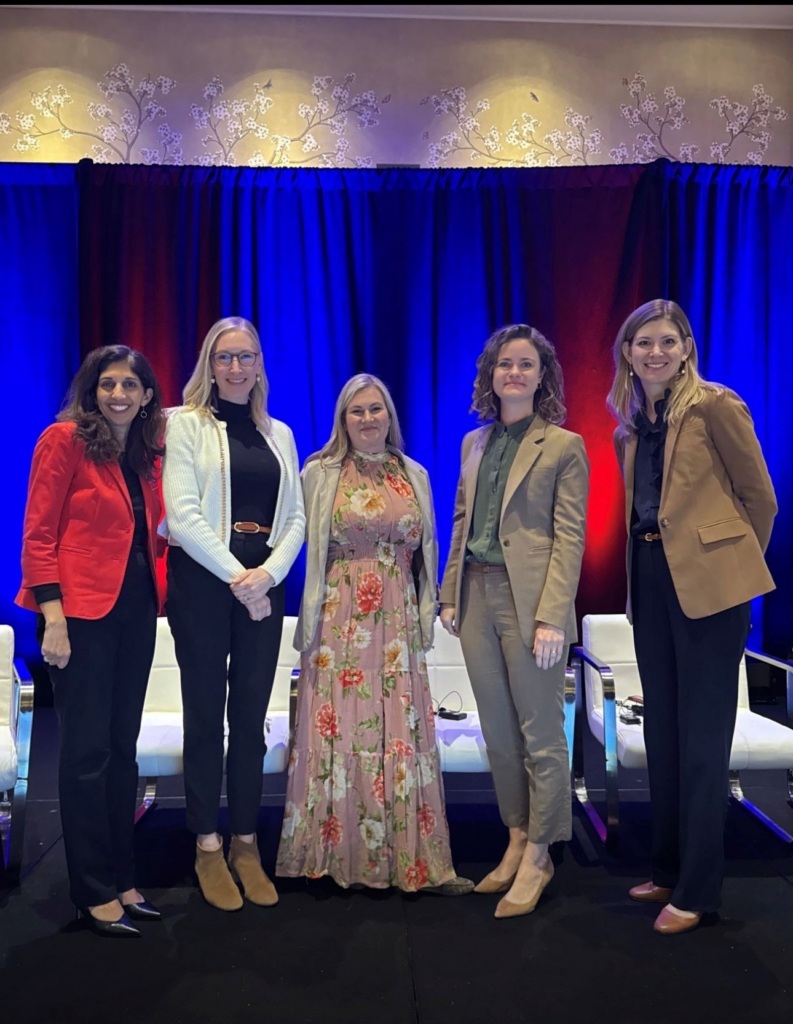
From left: Hemi Tewarson, NASHP, Kari Armijo, Secretary, New Mexico Healthcare Authority; Dana Flannery, Former Director, New Mexico Medicaid; Sasha O’Connell, Director, Idaho Medicaid & Juliet Charron, Director, Idaho Dept. of Health & Welfare
New Mexico has also invested in stabilizing rural providers through the Rural Health Care Delivery Fund. This fund supports rural health care providers and facilities by covering operating losses, including startup costs for new or expanded which is an essential strategy in communities where patient volumes are low and financial margins are thin. With $146 million in General Fund appropriations, the Rural Health Care Delivery Fund has funded 111 projects or 80 funded organizations to date. During fiscal years 2024-2027, early outcomes include nearly 260,000 patient encounters, services provided to more than 135,000 individuals, and the hiring of over 825 full-time health workers. During the 2026 Special Session, lawmakers transferred an additional 50 million dollars to the fund to stabilize services at risk of reduction or closure and to broaden eligibility to include providers in federally designated high need Health Professional Shortage Areas (HPSA) and tribally operated facilities.
In Idaho, state officials emphasized that rural health challenges are central to Medicaid and health system policy, given the scale and severity of access gaps across the state. Nearly all of Idaho is federally designated as a HPSA, with 98 percent of the state classified as a primary care HPSA, 100 percent as a mental health HPSA, and 95 percent as a dental HPSA, placing Idaho among the lowest ranked states for primary care physician availability. Geographic isolation further compounds these shortages, particularly for maternal health services. Nearly one quarter of rural women live more than 30 minutes from a birthing hospital, and some must travel more than an hour to access obstetric care. Financial strain is also widespread, with 46 percent of Critical Access Hospitals operating at a loss, alongside limited emergency medical services infrastructure that relies heavily on volunteers and air transport.
In response, Idaho Medicaid has adopted a statewide care delivery mindset that prioritizes access regardless of geography, emphasizes independent and community based living tailored to rural realities, and focuses on making Medicaid participation as seamless as possible for providers. State leaders underscored the importance of strong, high touch relationships with providers, described as the willingness to pick up the phone to resolve challenges, as well as continued investments in broadband and connectivity, which, while improving, remain essential to sustaining care delivery in many rural communities.
At the federal level, the Health Resources and Services Administration (HRSA), within the U.S. Department of Health and Human Services, plays a central role in supporting rural health efforts across the country. Through its Federal Office of Rural Health Policy, HRSA administers a wide range of grant programs designed to build health care capacity, strengthen rural health networks, support rural hospitals, and address workforce shortages. HRSA also coordinates rural health activities across the Department and evaluates how federal policies and payment systems affect rural communities.
Among HRSA’s many investments are rural hospital programs that provide funding and technical assistance to strengthen rural hospitals. These programs include:
- State Offices of Rural Health Program, which serves as the primary rural health resource in every state. SORHs connect rural hospitals and communities to state and federal resources, provide technical assistance, support quality improvement and workforce initiatives, and help rural providers navigate funding opportunities and regulatory requirements.
- Medicare Rural Hospital Flexibility Program, which supports Critical Access Hospitals (CAHs) by providing funding and technical assistance through state programs. The Flex program helps CAHs improve quality of care, financial and operational performance, emergency medical services integration, population health initiatives, and collaboration with other health care providers to ensure continued access to essential hospital services in rural areas.
- Small Rural Hospital Improvement Program, which assists small rural hospitals with 49 beds or fewer by helping them strengthen operations, improve quality outcomes, invest in health information technology, and participate in value-based care models such as accountable care organizations, shared savings programs, and other payment and delivery system reforms.
- Hospital Technical Assistance: In addition to the state programs, HRSA funds six programs to provide free technical assistance to rural hospitals and Rural Health Clinics.
- Rural Veterans Health Access Program, which supports states in improving access to health care services for veterans living in rural areas. The program promotes coordination between HRSA, state partners, and the Department of Veterans Affairs to expand access to mental health and other health care services, particularly in communities far from VA facilities.
HRSA’s grant programs, along with CMS’s investment in the Rural Health Transformation Program, are important complements to state Medicaid agencies’ work. By stabilizing providers, supporting workforce training pipelines, and expanding the rural health workforce, HRSA and CMS investments help ensure that Medicaid members can access essential services close to home, even in communities where provider supply is limited and financial sustainability is fragile.
Federal investments through HRSA and CMS, paired with targeted state strategies like those underway in New Mexico and Idaho, demonstrate that sustained funding, workforce development, and system stabilization can meaningfully improve access to care in rural communities. These gains, however, require continued coordination across federal, state, and local partners, as well as policies that recognize the unique realities of delivering care where distance, demographics, and limited resources intersect. By maintaining a long-term commitment to rural health infrastructure and aligning investments across programs and payers, policymakers can ensure that rural communities are not simply supported in moments of crisis, but positioned to thrive with accessible, high-quality care for generations to come.