
NAMD Responds to CMS’ Medicaid Enterprise Systems (MES) IT Standards – Request of Information
NAMD response to CMS' MES IT Standards RFI.
Alabama Medicaid CIO Mason Tanaka on why modernization starts with the business, why governance is critical to build systems that last, and how that foundation is paving the way for new technology.
Q: You’ve served in Alabama for almost a decade, following 20 years in the Air Force. What drew you to public service, and what has kept you in Medicaid technology?
I spent 20 years in the Air Force, all of it in data processing: mainframe operator, computer programmer, database administrator, then management. After I retired from the Air Force, I spent the next 12 years in the private IT industry before I got into public service almost by accident. A friend who’d gone to work for the state kept picking my brain over lunch about business process issues, and eventually said, why don’t you just work for the state?
I made the switch in 2013 as a consultant to central IT, but soon became the Director of Strategic Planning and IT Policy in the newly formed Office of Information Technology (OIT). My first task was drafting the state’s IT strategic plan. What I found was that Alabama’s IT issues were structural, not technical, so I wrote the plan that way.
From there I found my way back to central IT to serve as the Director of the Information Systems Division and ultimately back to OIT to become the state’s Chief Information Security Officer (CISO). About a year later, the Medicaid Agency came calling. The agency had been trying to recruit a Medicaid Deputy Commissioner and CIO for months. I agreed to meet with then-Commissioner Stephanie Azar.
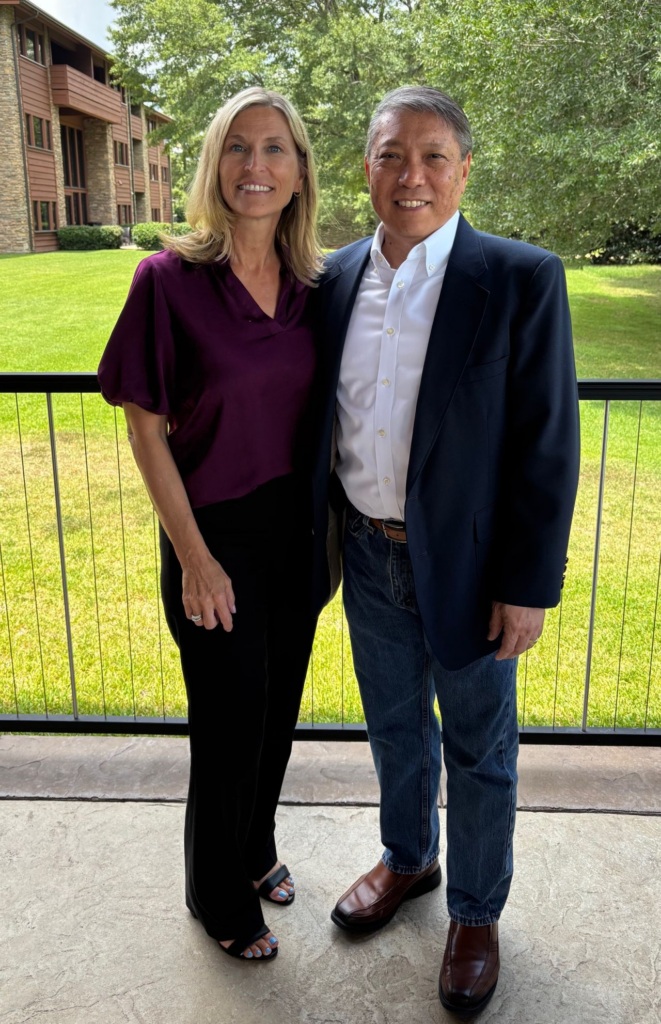
That meeting turned into her interviewing me, and by the end she’d offered me the job. I knew I’d learn a lot from her in a world where I couldn’t even spell MMIS, and I liked the challenge she described: an upcoming modernization, an eligibility system on its last legs, and a Health Insurance Exchange (HIE) about to be canceled. I’d also be closer to the mission of supporting the citizens of Alabama. Supporting Medicaid is an honorable mission.
Supporting Medicaid is an honorable mission.
I started in September 2017 and I’m still here nine years later. What keeps me here is the team: I was given the ability to build a fantastic one, and to look at a problem and apply the right technology to innovate. Innovation is a stated value at Alabama Medicaid, and when I asked Stephanie what she meant by it, she said we always need to find better ways to serve our beneficiaries, whether through program or technology. She meant it.
Q: Is that kind of air cover from senior leaders crucial to driving innovation?
Absolutely, and in the Air Force we call it top cover, and I had it. But I didn’t want to lean on it. Trust helps make these systems work, and part of earning trust with my fellow deputy commissioners was really listening to their challenges and what technology could do to help, rather than forcing technology on them.
Q: What does innovation look like when you’re modernizing systems so consequential to the health of over a million Alabama residents, and how do you decide what to tackle first?
To me, innovation isn’t about innovating for its own sake. It must be meaningful, meaning it furthers the agency’s mission. That starts with really understanding the business, not just the programs. We began our modernization with a disciplined business process modeling exercise across the whole agency. When I read about the modularity mandate, I didn’t see it as a mandate to replace systems: I saw it as a mandate to innovate, so we treated it as a business transformation effort.
We mapped our current business processes, then ran visioning sessions where we told people: forget your IT system, forget the screens. What are our teammates trying to accomplish, and how could that be better?
We mapped our current business processes, then ran visioning sessions where we told people: forget your IT system, forget the screens. What are our teammates trying to accomplish, and how could that be better?
Q: What does business process modeling look like in practice?
Business process modeling is documenting how the work actually gets done. What starts a process, who touches it, what information moves, where it goes next. You do that without describing any of it in terms of a system. If a model says a worker opens the eligibility screen, you’ve modeled your software, not your business. States don’t have to start from scratch here. MITA gives you a common vocabulary and a starting list of Medicaid business processes, and most states have a self-assessment sitting on a shelf from a past APD cycle.
The delta between the current and the ideal future became our roadmap. That same work let us carve up our MMIS into modules with clear interfaces between them, which shaped not just our roadmap but our end-to-end technology and procurement strategy; procurement was the very last thing we put in place, once we understood the sequencing everything needed to follow.
Q: Many in government say that you have to solve procurement first. It sounds like you did the opposite?
Procurement was last. This transformation wasn’t just about our programs; it was about how we run the agency. My first task was establishing governance: project, security, and data. In 2017 I conducted a Strengths, Weaknesses, Opportunities, and Threats (SWOT) analysis that was really asking whether the organization was ready for something this unprecedented. No state Medicaid program had modularized like this before, so on day one, no organization would have been ready. We had no governance at all going in, so that foundation had to come before we brought in vendors.
Q: Is there a specific problem Alabama Medicaid can solve today with newer technology that simply wasn’t feasible when you first stepped into this role in 2017?
Like a lot of states, Alabama’s MMIS is decades old. It’s been upgraded overtime, but the core platform — the interChange platform — is still decades old. Business is the engine for technology: here’s our business, here’s the IT that supports it. But when you have a legacy system as old as our MMIS, the business processes can become limited by the technology.
As I mentioned before, we held “visioning sessions” with agency program teams to understand what we’d like our systems to be able to do in an ideal world. During those visioning sessions, we took away our systems limitations – we told our partners not to think about the legacy system but about what their teams do and what their ideal outcomes are. Then it became almost a “what if” discussion.
As we develop the ideal future facing processes, we can ask: can technology do this? Can it support this particular business process? You can look at those layers and ask whether technology can support them.
If you decompose those business process models enough, like we did, they turn into business requirements for your Request for Proposals (RFPs). Now you’re translating what your ideal future facing models look like into requirements vendors can respond to. The potential vendors can see a requirement and say, here’s how we’ll satisfy it with either off the shelf or custom built technology.
Q: How do you share what Alabama builds with other states?
We share mostly through conferences: Medicaid Enterprise Systems Conference, the HIT Connect Summit, and NAMD’s programming. We present for two major reasons.
The first is to educate: there might be other states trying to do the same thing, and we can show them how we did it, and we can make the whole Medicaid system better for it.
The other is communicating to the vendor community, being as transparent as we can, so that when vendors decide to bid on our opportunities, they better understand our strategy, which results in better RFP responses.
A lot of those conferences and presentations have led to other states reaching out and us having calls with them. We’re more than happy to share anything we’ve done: our business process models, systems we’ve developed internally. Our eligibility system, for example, was built internally. And, heck, we haven’t even talked about AI yet, but all the AI tools we’ve built internally too. I believe in system reuse. I think it’s underutilized, but it’s always available.
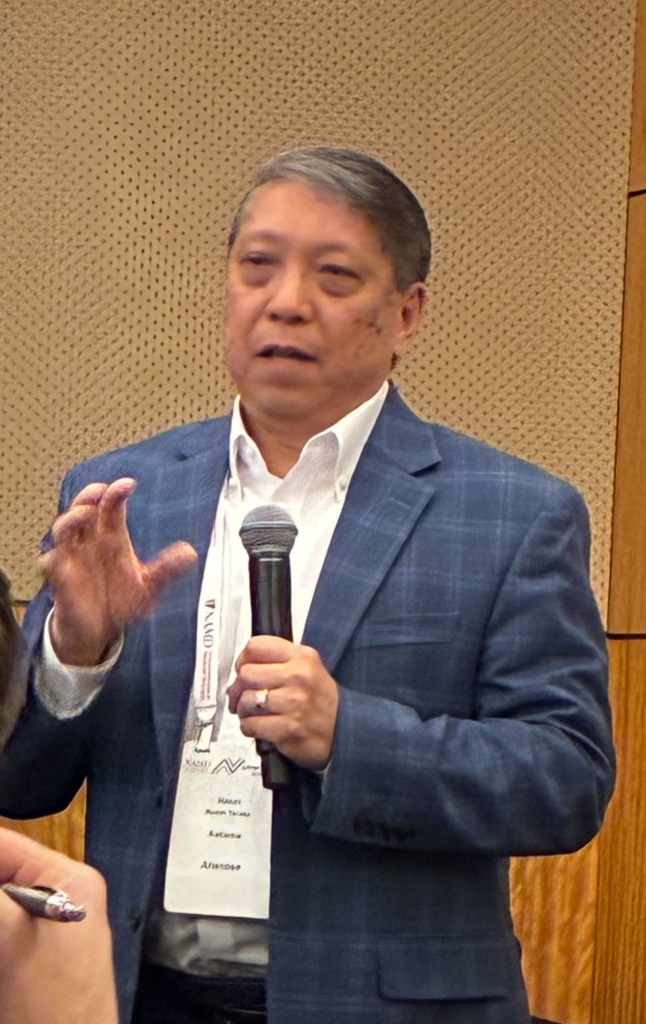
Q: Speaking of AI, what has been Alabama’s biggest technology opportunity ? And are you only using large language models (LLMs) like ChatGPT, or traditional machine learning practices too?
The biggest opportunity Alabama Medicaid is not a single technology, but the integrated modernization of our Medicaid Enterprise Systems (MES) through the Alabama MES Modernization Program (AMMP) combined with our structured AI Continuum maturity model. This pairing creates the modular architecture, cloud-based infrastructure, and enhanced analytics required to scale AI responsibly and has led us to our next major modernization phase, the AMMP-AI initiative. This initiative is documented in our AI Transformation Strategic Plan. This plan explicitly states that AMMP’s modernization ensures data quality, interoperability, and operational agility required for advanced AI capabilities to thrive, while our AI Continuum provides the governance, maturity model, and guardrails.
We are not limiting ourselves to just LLM’s and Generative AI. Our AI strategic plan covers the full spectrum, explicitly including traditional and predictive machine learning practices alongside newer generative tools, such as traditional Machine Learning, Natural Language Processing, Generative AI, Retrieval Augmented Generation (RAG), Deep Learning, Computer Vision, and Agentic AI. We are also looking at combined “smart automation” – Remote Process Automation (RPA) with AI (rule-based automation plus learning-based AI) for process optimization and integrating advanced analytics and machine learning to improve forecasting, identify trends, and support proactive decision-making. We are excited to take this holistic and responsible approach to AI adoption across the entire agency.
Q: What advice would you give to partners — vendors, or fellow state IT leaders — who want to work with Medicaid on technology modernization?
My advice to vendors is to learn about what we’re doing and learn about Alabama and our agency. Don’t try to sell me something without understanding our program and where we are. I believe Alabama is very transparent in what we do — we even have dedicated sessions at some of these conferences just for vendors, where we lay out what we’re doing, where we are, and what we need from them. Learn that and tailor the approach to it.
My advice to vendors is to learn about what we’re doing and learn about Alabama and our agency.
Q: With many governors up for election this fall, 2027 may bring new Medicaid Directors. What should they know about Medicaid IT systems work?
New Medicaid Directors should understand that Medicaid IT systems are not just technical infrastructure; they’re the core operational engine of the program. Most policy decisions ultimately depend on how well it can be implemented within eligibility systems, MMIS modules, data platforms, and/or other IT systems. Prioritize modernization and interoperability, invest early in data quality, and build strong relationships with their CIOs and procurement teams, since modernization work lives at the intersection of technology, finance, and policy. Engage federal partners proactively, strengthen cybersecurity practices, and treat change management as a central part of any system update. Finally, pay close attention to the culture within their IT teams; setting a tone of collaboration and modernization can make the difference between stalled projects and successful long-term transformation.
Medicaid IT systems, and increasingly AI, are foundational to how the program functions. AI is already reshaping eligibility workflows, provider screening, predictive analytics, fraud, waste and abuse, and beneficiary engagement, but it can only be effective if the underlying systems are modernized, interoperable, and supported by high‑quality data. Directors should approach AI as a strategic enabler rather than a stand‑alone tool, building strong partnerships with their IT, cybersecurity, and procurement teams to ensure responsible governance, privacy protection, and compliance with federal guidance. At the same time, working closely with CMS on evolving AI policy and funding opportunities will accelerate modernization. Just as critical is the cultural work — IT teams need leadership that encourages innovation while maintaining guardrails, so AI deployments genuinely improve outcomes without adding risk or operational burden.
Drop us your email and we’ll keep you up-to-date on Medicaid issues.